


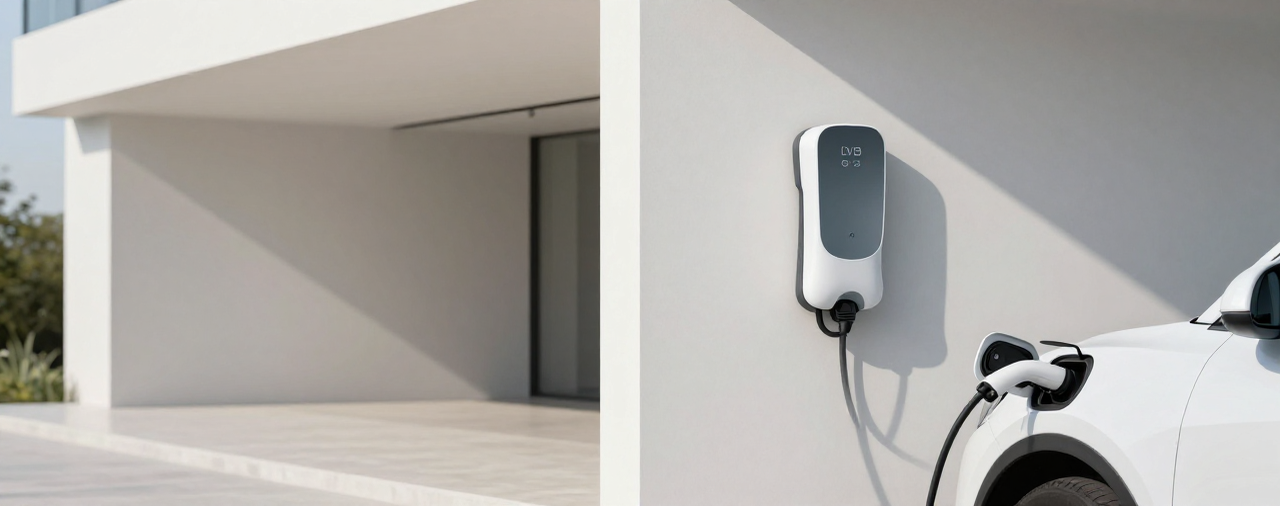
Why Install a Level 2 EV Charger at Home?
With electric vehicle adoption accelerating in 2026, a Level 2 home EV charger has become essential for EV owners. Unlike the standard Level 1 charger that comes with your car (adding just 3-5 miles of range per hour), a Level 2 charger delivers 25-40 miles of range per hour — enough to fully charge most EVs overnight.
Key Takeaways
- Level 2 chargers deliver 7.6kW-11.5kW vs 1.2kW for Level 1
- Average installation cost: $500-$2,000 depending on electrical panel readiness
- Federal tax credit covers 30% of installation costs (up to $1,000)
- Professional installation recommended for safety and code compliance
- Smart chargers with WiFi/APP control offer scheduling for off-peak rates
Level 2 EV Charger Installation Costs in 2026
Equipment Costs
| Charger Type | Price Range | Best For |
|---|---|---|
| Basic 32A Wall-Mounted | $200-$400 | Standard home use, reliable charging |
| Smart WiFi 40A Charger | $400-$700 | App control, scheduling, energy monitoring |
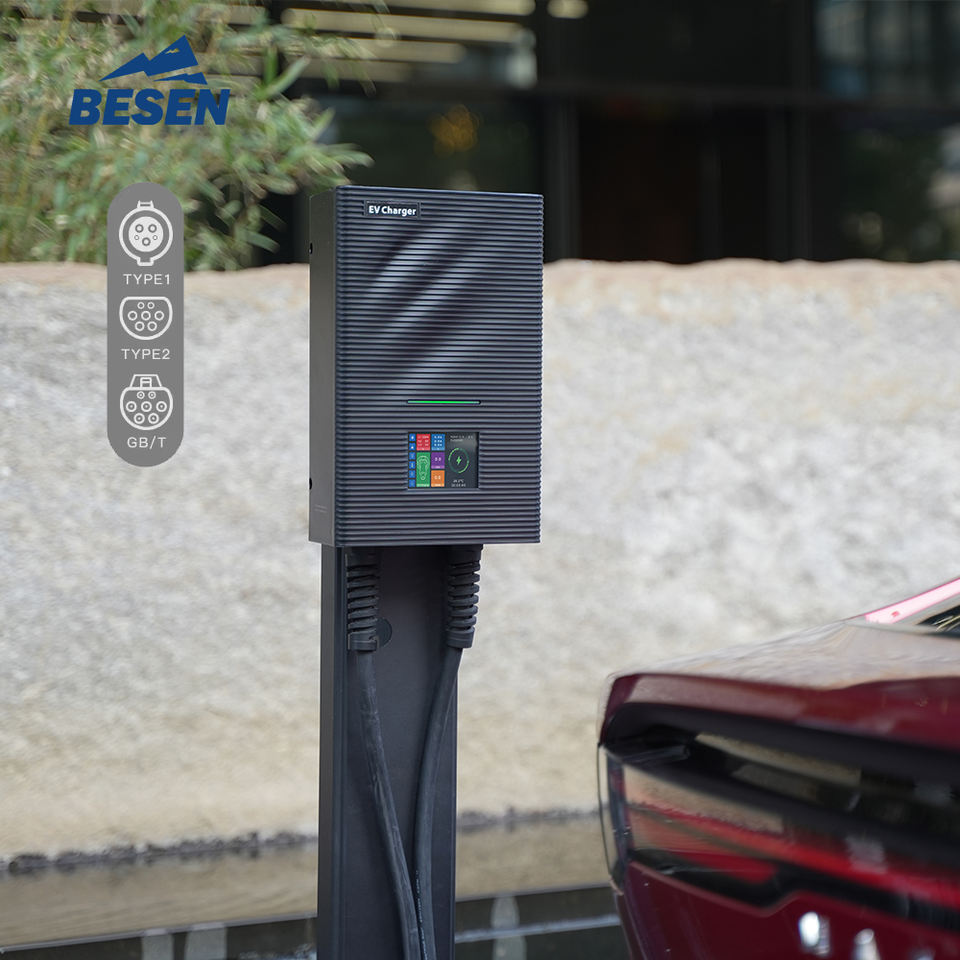
| Premium 48A Smart Charger | $600-$900 | Fastest Level 2, RFID/NFC, OCPP support |
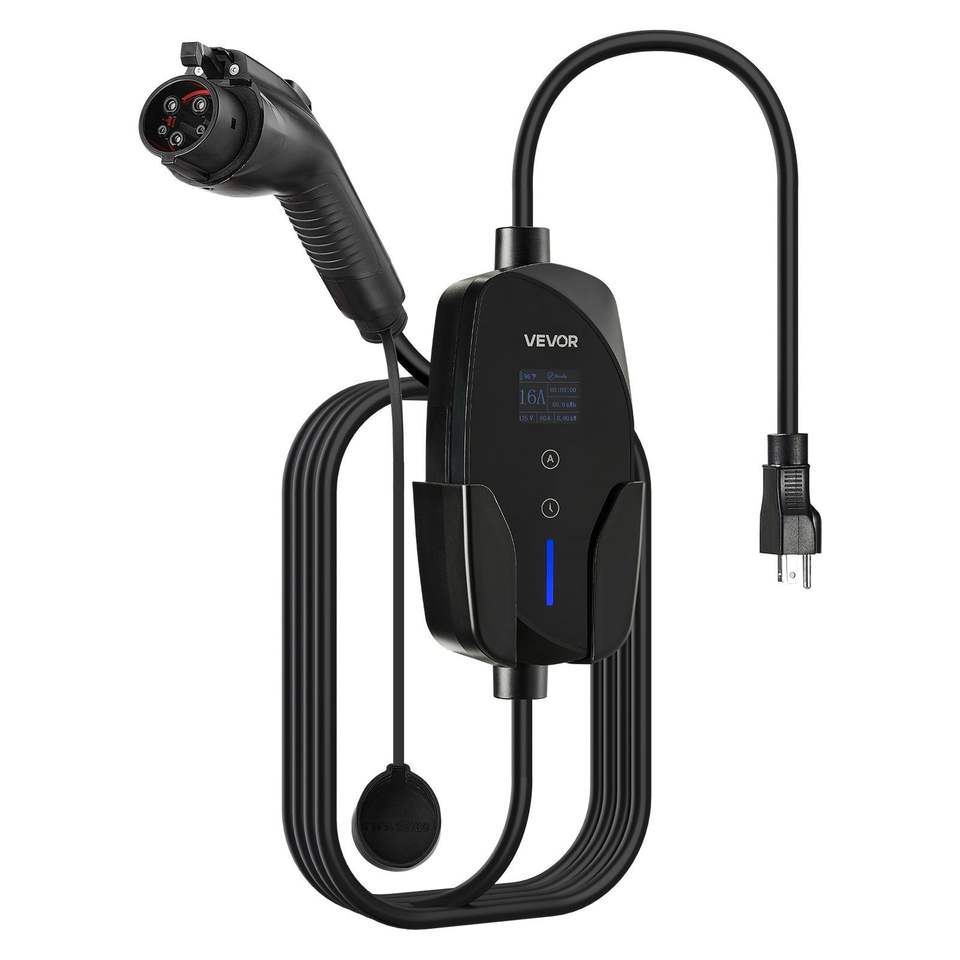
| Portable Level 2 Charger | $150-$350 | Travel, flexible plug options, dual voltage |
Installation Labor Costs
- Simple installation (panel nearby, no upgrades): $300-$500
- Moderate installation (new circuit, conduit run): $500-$1,000
- Complex installation (panel upgrade, long run, trenching): $1,000-$3,000+
- Permit fees: $50-$200 depending on local jurisdiction
Electrical Requirements for Level 2 EV Charger Installation
Panel Capacity
A Level 2 charger typically requires a dedicated 240V circuit with a 40A-60A breaker. Most modern homes (built after 2000) have 200A service panels that can accommodate an EV charger. Homes with 100A panels may need an upgrade.
Circuit Breaker Guide
| Charger Amperage | Required Breaker | Charging Speed | Miles/Hour |
|---|---|---|---|
| 16A (3.8kW) | 20A breaker | Slow | 12-15 |
| 24A (5.7kW) | 30A breaker | Moderate | 18-22 |
| 32A (7.6kW) | 40A breaker | Fast | 25-30 |
| 40A (9.6kW) | 50A breaker | Very Fast | 30-38 |
| 48A (11.5kW) | 60A breaker | Maximum | 38-44 |
NEMA Outlet Types
- NEMA 14-50: Most common for EV charging, 50A, 240V. Found in RV parks and many garages.
- NEMA 6-50: Welder outlet, 50A, 240V. Alternative to 14-50 without neutral wire.
- NEMA 6-20: 20A, 240V. Suitable for lower-power 16A chargers.
- Hardwired: Direct electrical connection. Safest, most reliable, required for 48A+ chargers.
Step-by-Step Installation Process
1. Choose Your Charger Location
Select a spot within 15-25 feet of your vehicle’s charge port. Consider:
- Proximity to electrical panel (shorter runs = lower cost)
- Protection from weather (covered parking ideal)
- Cable management (wall mount or pedestal)
- Future EV purchases (center location between parking spots)
2. Get a Professional Electrical Assessment
A licensed electrician will evaluate:
- Panel capacity and available breaker slots
- Existing wiring condition and gauge
- Load calculation for your entire home
- Permit requirements and local code compliance
3. Pull Permits
Most jurisdictions require an electrical permit for EV charger installation. Your electrician typically handles this. Permit costs range from $50-$200.
4. Install the Circuit and Charger
The installation day typically takes 2-4 hours:
- Install dedicated circuit breaker in panel
- Run conduit and wiring from panel to charger location
- Mount the charger bracket on the wall
- Connect wiring to charger (hardwired) or install NEMA outlet
- Test and verify proper operation
5. Inspection and Activation
Schedule a city/county electrical inspection to approve the installation. Once passed, your charger is ready for use!
Smart vs. Basic Chargers: Which Should You Choose?
| Feature | Basic Charger | Smart WiFi Charger |
|---|---|---|
| Price | $200-$400 | $400-$900 |
| Scheduling | Manual only | APP-based, automated |
| Energy Monitoring | No | Real-time kWh & cost tracking |
| Access Control | None | RFID/NFC/APP authentication |
| OTA Updates | No | Firmware updates via WiFi |
| Load Balancing | No | Dynamic load management available |
| Solar Integration | No | Some models support solar PV |
| OCPP Protocol | No | Commercial network compatible |
2026 Federal & State Incentives
Federal Tax Credit
The Alternative Fuel Vehicle Refueling Property Credit (30C) covers 30% of installation costs, up to $1,000 for residential installations. This applies to both the charger hardware and electrical work.
State & Local Incentives
- California: Up to $500 rebate via utilities (SCE, PG&E, SDG&E)
- New York: Up to $500 rebate through NYSERDA
- Colorado: Up to $500 tax credit
- New Jersey: Up to $250 rebate via PSE&G
- Many utilities: Time-of-use rates as low as $0.03/kWh for off-peak EV charging
Safety Considerations
- Always use a licensed electrician — EV chargers draw continuous high current for hours
- Ensure proper grounding — GFCI protection is code-required for outlet installations
- Use correct wire gauge — 6 AWG for 48A, 8 AWG for 32A-40A installations
- Weatherproof outdoor installations — Use NEMA 4X or IP65 rated enclosures
- Regular inspection — Check plug and cable for wear, heat damage, or corrosion annually
FAQ: Level 2 EV Charger Installation
How long does installation take?
A typical installation takes 2-4 hours. Complex jobs (panel upgrades, long conduit runs) may take a full day.
Do I need a permit?
Yes, most jurisdictions require an electrical permit. Your electrician usually handles this process.
Can I install it myself?
While technically possible for experienced DIYers, professional installation is strongly recommended. Improper installation risks fire, equipment damage, and voided warranties. Many charger warranties require professional installation.
What if my panel is full?
Options include: tandem breakers to free up space, a sub-panel, or a load management device that automatically reduces charging when home loads peak.
Will my electricity bill increase significantly?
Charging an EV typically adds $30-$60/month to your electric bill — far less than the $150-$250/month you’d spend on gasoline. Off-peak charging can reduce this further.
Conclusion
Installing a Level 2 EV charger is one of the best investments you can make as an EV owner. With overnight charging convenience, significant fuel savings, and available tax incentives, the installation typically pays for itself within 1-2 years. Choose a charger that matches your vehicle’s capacity, your home’s electrical setup, and your smart feature needs.
Ready to find the perfect Level 2 charger for your home? Browse our Level 2 Home Charger collection or explore Smart EV Chargers with WiFi APP control.